Anatta
Anatta, or no-self, denies that a permanent independent self can be found in the changing aggregates of experience.
Short answer
Anatta, or no-self, denies that a permanent independent self can be found in the changing aggregates of experience.
Why it matters
Anatta is best approached as a living philosophical tool rather than a dictionary label. It helps readers see how a problem, distinction, or tradition organizes arguments.
Example
A reader can use Anatta to distinguish a surface-level slogan from the deeper philosophical issue underneath it.
Common confusion
Anatta has one simple meaning in every context. Its meaning shifts across authors and traditions, so context matters.
Read this if
- You want a plain-English entry point into Anatta.
- You need examples before moving into primary texts or specialist debates.
- You are mapping how Anatta connects to nearby ideas in Buddhist philosophy.
Core tension
The concept looks simple as a label, but becomes clearer only when its contrasts and examples are visible.
Best for
Buddhist philosophy, comparative reading, essay planning, and concept mapping.
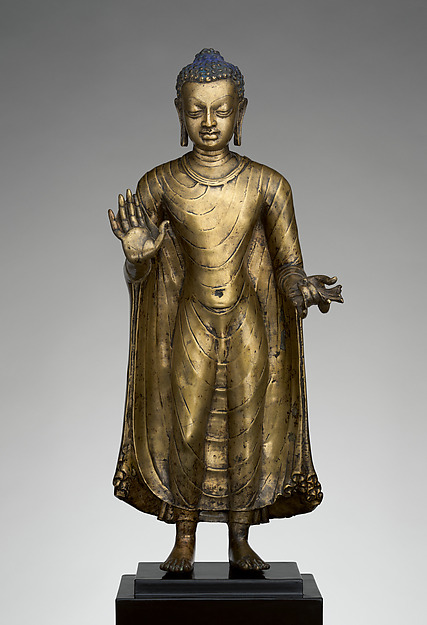
Start With The Human Problem
Anatta matters because Indian and Buddhist philosophy rarely separates metaphysics, ethics, practice, and liberation into isolated boxes. People suffer partly because they grasp changing body, feeling, perception, formations, and consciousness as mine, me, or myself. The concept gives that pressure a disciplined vocabulary. It asks what a person really is, what action does, what suffering reveals, what knowledge can change, and whether freedom is a matter of insight, practice, devotion, moral discipline, or a different way of reading experience. A useful first reading does not rush to a slogan. It asks which problem the term is solving and which neighboring term it must be kept distinct from.
Definition
Anatta, or no-self, denies that a permanent independent self can be found in the changing aggregates of experience.
Why It Matters
Anatta is best approached as a living philosophical tool rather than a dictionary label. It helps readers see how a problem, distinction, or tradition organizes arguments.
A careful reading of Anatta requires attention to its historical setting, its rival interpretations, and the examples through which it becomes intelligible.
The concept matters because it connects abstract inquiry to recurring human questions about knowledge, value, reality, action, and meaning.
Historical Context
Anatta is central to early Buddhist analysis, where the Buddha denies that the changing aggregates contain a permanent independent self. The term appears inside traditions that argue through scripture, commentary, disciplined practice, debate, and school formation. That matters for Anatta: it is not only a word with a translation, but a node in arguments about self, reality, action, rebirth, knowledge, suffering, and release. Readers should ask whether a passage is diagnosing bondage, giving a practice instruction, making a metaphysical claim, or correcting a rival school.
Classical Indian philosophy includes Brahmanical, Buddhist, and Jain traditions, and those traditions disagree while sharing a vocabulary of action, consequence, discipline, and liberation. Buddhist uses of a term may reject a permanent self; Vedantic uses may interpret self and ultimate reality through Atman and Brahman; Jain and yoga traditions may stress non-harming, restraint, or disciplined purification. A single English word can hide those differences, so the page should keep the debate visible.
Modern readers often meet Anatta through global Buddhism, yoga culture, comparative religion, or brief textbook summaries. Those contexts can make the term familiar while also making it too vague. Philosophical reading restores pressure: What claim is being made? What practice follows from it? What rival interpretation would deny it? What changes if the concept is read beside Chinese Buddhism, Greek metaphysics, modern ethics, or ordinary questions about suffering and responsibility?
Why Keep Reading
Debate Map
Anatta as analytic denial of self
This view uses analysis of experience to show that no permanent owner can be found. It undercuts attachment. Critics ask whether the denial can still explain responsibility, continuity, and compassion.
Anatta as therapeutic strategy
This reading stresses how no-self functions in practice: it loosens clinging rather than trying to win a metaphysical contest. Critics ask whether this avoids the full doctrinal force of the teaching.
How To Read This Concept Closely
When reading Anatta, begin with the surrounding problem. Is the text concerned with rebirth, ignorance, suffering, duty, ultimate reality, consciousness, or contemplative discipline? Look for the five aggregates and the repeated question of whether each can be permanent, controllable, and properly called self. The answer changes how the same term should be translated and what sort of claim it makes. A school may use a concept to describe reality, prescribe conduct, explain bondage, or guide practice, and those uses should not be collapsed.
Watch for the level of analysis. Indian and Buddhist texts often move between ordinary language, disciplined practice, and ultimate analysis. A term may be useful conventionally while also being criticized at a deeper level. This is especially important for Buddhist philosophy, where terms such as self, suffering, emptiness, and liberation can be used pedagogically without granting them independent essence.
Finally, test the concept against a case. Ask how Anatta would read a person who acts well but remains attached to results, a meditator who seeks calm but still clings to identity, a moral rule that protects life but conflicts with duty, or a metaphysical claim that seems liberating to one school and misleading to another. Cases reveal whether the term is doing ethical, metaphysical, diagnostic, or practical work.
How This Concept Works In Arguments
How This Concept Does Work
Anatta is useful because it does more than name a topic. It gives a reader a way to sort examples, test claims, and notice where an argument is changing levels. In Buddhist philosophy, the term often marks a pressure point: one side treats the issue as a matter of definition, another side treats it as a problem of practice, and a third side asks what the concept hides when it is used too quickly.
A strong reading therefore asks what the concept explains, what it leaves unresolved, and which neighboring concepts it needs. On this page those neighbors include Atman, Dukkha, and Dependent Origination. Reading them together prevents Anatta from becoming an isolated label. It becomes part of a network of distinctions that can support essays, classroom discussion, and slower interpretation of primary texts.
How To Use It In An Argument
When you use Anatta in an argument, begin by naming the problem it is meant to solve. Then ask whether the concept is being used descriptively, normatively, historically, or comparatively. This simple check keeps the discussion from sliding between different claims. It also helps explain why two writers may use similar language while disagreeing about what follows from it.
The safest essay move is to connect the definition to a concrete contrast. A paragraph can state the definition, show an example, introduce a misconception, and then compare Anatta with one related idea. That pattern gives the reader enough structure to follow the argument without reducing the concept to a slogan or a dictionary sentence.
What To Notice In Sources
The sources for this page are not decoration. They show which institutions, reference works, and primary traditions make the concept stable enough to cite. Start with Stanford University, University of Tennessee at Martin, and University of Tennessee at Martin, then ask how each source frames the problem: as a historical development, a live debate, a textual interpretation, or a practical distinction. The differences between sources often reveal the concept's real shape.
When Buddha, Nagarjuna, and Vasubandhu appear in connection with Anatta, read them for the question they are answering, not only for a quotable sentence. Philosophical terms change meaning as they move across texts and problems. A careful reader tracks that movement and asks why this term, rather than a simpler one, became necessary.
A final source check is to ask what would count as misuse. If a source treats Anatta as a technical term, the reader should not use it as a loose mood word. If a source treats it as a family of debates, the reader should name the debate rather than forcing one settled meaning too quickly.
Study Prompts
- 01What problem becomes harder to see if Anatta is removed from the discussion?
- 02Which related concept most sharply changes how Anatta should be read?
- 03Where does an example support the definition, and where does it strain it?
Key Questions
- 01What problem does Anatta try to clarify?
- 02Which thinkers and traditions shaped Anatta?
- 03How does Anatta change the way readers understand philosophy?
Examples
- A reader can use Anatta to distinguish a surface-level slogan from the deeper philosophical issue underneath it.
- In discussion, Anatta helps connect an everyday problem to a tradition of argument rather than treating it as mere opinion.
Common Misconceptions
Anatta has one simple meaning in every context.
Its meaning shifts across authors and traditions, so context matters.
Anatta is only a historical term.
It remains useful because the problem it names still appears in contemporary debates.
Anatta can be understood without related concepts.
It becomes clearer when placed beside neighboring and contrasting ideas.
FAQ
Why is Anatta important?
It gives readers a stable entry point into a broader philosophical debate.
How should beginners read about Anatta?
Begin with a concise definition, then compare examples, related concepts, and the main thinkers associated with it.
Suggested Reading Path
- Step 1
Start with the problem Anatta answers
Identify the reader pressure first: People suffer partly because they grasp changing body, feeling, perception, formations, and consciousness as mine, me, or myself. This prevents the term from becoming a floating translation.
- Step 2
Place it beside a rival
Read Anatta next to its nearest contrast in the cluster. The contrast usually reveals whether the issue is selfhood, action, suffering, liberation, consciousness, or practice.
- Step 3
Use one practice example
Apply the concept to conduct, meditation, rebirth, duty, craving, or learning. Indian and Buddhist terms often become clearest when they have to guide a life, not only explain a doctrine.
Questions To Think With
- What does Anatta let a reader see that an ordinary English translation hides?
- Does Anatta make a claim about reality, a claim about practice, a claim about ethics, or all three?
- Which neighboring concept most changes the meaning of Anatta when the two are read together?
- What misuse of Anatta would make suffering, duty, selfhood, or liberation harder to understand?
- What contemporary example could show Anatta without turning it into a slogan?
Where To Go Next
Sources
- Stanford Encyclopedia of Philosophy - BuddhaStanford University - plato.stanford.edu
- Internet Encyclopedia of Philosophy - BuddhaUniversity of Tennessee at Martin - iep.utm.edu
- Internet Encyclopedia of Philosophy - Madhyamaka Buddhist PhilosophyUniversity of Tennessee at Martin - iep.utm.edu
- SuttaCentral - SN 12.1 Dependent OriginationSuttaCentral - suttacentral.net
- SuttaCentral - SN 56.11 Setting in Motion the Wheel of DhammaSuttaCentral - suttacentral.net