Deontology
Moral duties can bind agents regardless of whether violating them would produce better outcomes.
Short answer
Moral duties can bind agents regardless of whether violating them would produce better outcomes.
Why it matters
Deontology is best approached as a living philosophical tool rather than a dictionary label. It helps readers see how a problem, distinction, or tradition organizes arguments.
Example
A reader can use Deontology to distinguish a surface-level slogan from the deeper philosophical issue underneath it.
Common confusion
Deontology has one simple meaning in every context. Its meaning shifts across authors and traditions, so context matters.
Read this if
- You want a plain-English entry point into Deontology.
- You need examples before moving into primary texts or specialist debates.
- You are mapping how Deontology connects to nearby ideas in Ethics.
Core tension
The concept looks simple as a label, but becomes clearer only when its contrasts and examples are visible.
Best for
Ethics, comparative reading, essay planning, and concept mapping.
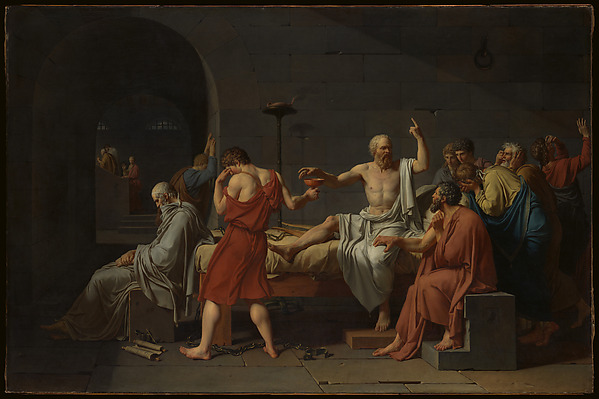
Start With The Human Problem
Deontology frames moral life around duties rather than outcomes. It asks us to ask not simply what will bring the best result, but what we ought to do because it is right. That shift matters because some actions are judged unacceptable even when they produce good consequences. Deontological thinking highlights principles, obligations, and respect for persons as anchors for ethics. It invites practical attention to promises, rights, and the form of moral reasons themselves, offering a distinctive guide for situations where consequences conflict with convictions about what justice or respect require.
Definition
Moral duties can bind agents regardless of whether violating them would produce better outcomes.
Why It Matters
Deontology is best approached as a living philosophical tool rather than a dictionary label. It helps readers see how a problem, distinction, or tradition organizes arguments.
A careful reading of Deontology requires attention to its historical setting, its rival interpretations, and the examples through which it becomes intelligible.
The concept matters because it connects abstract inquiry to recurring human questions about knowledge, value, reality, action, and meaning.
Historical Context
Roots of deontological thought extend through ancient and medieval moralists who emphasized principles and divine commands, but the label and modern arguments coalesce in the Enlightenment. Immanuel Kant is often central: his work reframed moral worth as action performed from duty, grounded in the form of a law that can be willed universally. Kant’s focus on autonomy and the dignity of rational agents reoriented ethics away from consequences and toward reasons generated by moral agents themselves.
Opponents and supporters of deontology developed their positions in response to social changes and philosophical rivalries. Utilitarianism, which prioritizes aggregate welfare, pressed the question of whether moral rules should yield to greater overall benefit. In reply, deontologists defended constraints and rights that limit what can be done in the name of utility. Over the nineteenth and twentieth centuries, philosophers elaborated alternatives to Kantian formalism: pluralist duty theories, rights-based approaches, and contractualist accounts that seek non-consequential foundations for obligations.
Contemporary debates broaden scope: deontological ideas now appear in bioethics, law, and political theory, where questions about consent, respect, and institutional duties matter. Philosophers test the limits of duty-based reasoning against emergencies, conflicting obligations, and complex social systems. Some combine deontological constraints with consequentialist sensitivities; others refine the logic of duty claims to preserve moral certainty without ignoring real-world trade-offs. The result is a living set of arguments about what duties are, where they come from, and how they should guide action.
Why Keep Reading
Debate Map
Kantian Deontology
Kantian deontology argues that moral obligations arise from the structure of rational agency. An action’s rightness depends on whether its guiding maxim could be willed as a universal law and whether it treats persons as ends, never merely as means. This view privileges consistency, autonomy, and respect for persons. Critics challenge its formalism, asking whether universalizability alone yields substantive content, or how to resolve conflicting duties without appealing to consequences.
Rossian Pluralism
W.D. Ross proposed a pluralist form of deontology built from prima facie duties—fidelity, reparation, gratitude, justice, beneficence, self-improvement, and nonmaleficence. These duties articulate moral tensions: none are absolute but can override one another in particular cases. Rossian pluralism seeks to capture moral intuition about multiple sources of obligation while avoiding the reductionism of single-principle theories. The challenge lies in explaining how to weigh competing duties reliably and whether intuition can be a stable guide.
Common-Sense vs. Systematic Critiques
Some deontologists start from common-sense moral convictions, insisting that ordinary judgments reveal genuine constraints. Systematic critics press for greater theoretical unity and argue that deontology can be ad hoc or unclear in complex situations. Conversely, critics from consequentialist camps accuse deontologists of rigidly prohibiting acts that, on balance, increase welfare. The debate turns on whether moral theory should prioritize principled constraints or flexible aggregation of reasons.
How To Read This Concept Closely
Begin with the notion of duty: deontological accounts claim that certain actions are right or wrong in virtue of their conformity to moral principles. This moves the spotlight from predicted outcomes to the agent’s reason for acting. Duty-based ethics encourages asking whether one’s motive respects moral law or treats others merely as means. That focus can illuminate why promises, contracts, and established rights feel morally weighty in a way utilitarian calculations sometimes miss.
Examine the structure of moral rules: deontology often distinguishes between absolute prohibitions and prima facie obligations. Absolutes forbid particular actions under any circumstance; prima facie duties allow for defeasibility—one duty may be outweighed by another. Reading classic deontological texts closely reveals how philosophers attempt to balance clarity with flexibility: they seek principles firm enough to guide action, yet sensitive to real conflicts that arise among duties.
Consider the role of moral worth and agency: for many deontologists, an action performed from duty carries special moral credit. This links ethical appraisal to internal states—motives and respect for moral law—rather than solely external consequences. That claim raises practical questions about moral assessment, responsibility, and praise. It also invites reflection on how institutions and social roles shape the conditions under which agents can act from genuine duty.
How This Concept Works In Arguments
How This Concept Does Work
Deontology is useful because it does more than name a topic. It gives a reader a way to sort examples, test claims, and notice where an argument is changing levels. In Ethics, the term often marks a pressure point: one side treats the issue as a matter of definition, another side treats it as a problem of practice, and a third side asks what the concept hides when it is used too quickly.
A strong reading therefore asks what the concept explains, what it leaves unresolved, and which neighboring concepts it needs. On this page those neighbors include Duty, Categorical Imperative, and Ethics. Reading them together prevents Deontology from becoming an isolated label. It becomes part of a network of distinctions that can support essays, classroom discussion, and slower interpretation of primary texts.
How To Use It In An Argument
When you use Deontology in an argument, begin by naming the problem it is meant to solve. Then ask whether the concept is being used descriptively, normatively, historically, or comparatively. This simple check keeps the discussion from sliding between different claims. It also helps explain why two writers may use similar language while disagreeing about what follows from it.
The safest essay move is to connect the definition to a concrete contrast. A paragraph can state the definition, show an example, introduce a misconception, and then compare Deontology with one related idea. That pattern gives the reader enough structure to follow the argument without reducing the concept to a slogan or a dictionary sentence.
What To Notice In Sources
The sources for this page are not decoration. They show which institutions, reference works, and primary traditions make the concept stable enough to cite. Start with Stanford University, University of Tennessee at Martin, and OpenStax, then ask how each source frames the problem: as a historical development, a live debate, a textual interpretation, or a practical distinction. The differences between sources often reveal the concept's real shape.
When Immanuel Kant, and Christine Korsgaard appear in connection with Deontology, read them for the question they are answering, not only for a quotable sentence. Philosophical terms change meaning as they move across texts and problems. A careful reader tracks that movement and asks why this term, rather than a simpler one, became necessary.
A final source check is to ask what would count as misuse. If a source treats Deontology as a technical term, the reader should not use it as a loose mood word. If a source treats it as a family of debates, the reader should name the debate rather than forcing one settled meaning too quickly.
Study Prompts
- 01What problem becomes harder to see if Deontology is removed from the discussion?
- 02Which related concept most sharply changes how Deontology should be read?
- 03Where does an example support the definition, and where does it strain it?
Key Questions
- 01What problem does Deontology try to clarify?
- 02Which thinkers and traditions shaped Deontology?
- 03How does Deontology change the way readers understand philosophy?
Examples
- A reader can use Deontology to distinguish a surface-level slogan from the deeper philosophical issue underneath it.
- In discussion, Deontology helps connect an everyday problem to a tradition of argument rather than treating it as mere opinion.
Common Misconceptions
Deontology has one simple meaning in every context.
Its meaning shifts across authors and traditions, so context matters.
Deontology is only a historical term.
It remains useful because the problem it names still appears in contemporary debates.
Deontology can be understood without related concepts.
It becomes clearer when placed beside neighboring and contrasting ideas.
FAQ
Why is Deontology important?
It gives readers a stable entry point into a broader philosophical debate.
How should beginners read about Deontology?
Begin with a concise definition, then compare examples, related concepts, and the main thinkers associated with it.
Suggested Reading Path
- Step 1
Start with a clear formulation
Read a concise statement of a deontological principle—such as universalizability or prima facie duties—so you can test examples against it. Concrete cases help reveal strengths and weaknesses faster than abstract summaries alone.
- Step 2
Compare contrasting cases
Work through moral dilemmas where duties conflict or where consequences pull in different directions. Comparing near-identical scenarios that differ only in motive or rule structure clarifies what makes an action deontologically permissible or forbidden.
Questions To Think With
- Which duties feel absolute to you, and why?
- How much moral weight should an agent’s motive carry compared with outcomes?
- Can a coherent system of duties handle large-scale social trade-offs?
- When is it reasonable to prioritize respect for persons over aggregate welfare?
- How should institutions translate individual duties into policy?
Where To Go Next
Sources
- Stanford Encyclopedia of Philosophy - Deontological EthicsStanford University - plato.stanford.edu
- Internet Encyclopedia of Philosophy - Kant's Moral PhilosophyUniversity of Tennessee at Martin - iep.utm.edu
- OpenStax - Moral Theory and Its ApplicationOpenStax - openstax.org