Identity
Identity asks what makes something the same thing across time, change, description, or possible circumstances.
Short answer
Identity asks what makes something the same thing across time, change, description, or possible circumstances.
Why it matters
Identity is best approached as a living philosophical tool rather than a dictionary label. It helps readers see how a problem, distinction, or tradition organizes arguments.
Example
A reader can use Identity to distinguish a surface-level slogan from the deeper philosophical issue underneath it.
Common confusion
Identity has one simple meaning in every context. Its meaning shifts across authors and traditions, so context matters.
Read this if
- You want a plain-English entry point into Identity.
- You need examples before moving into primary texts or specialist debates.
- You are mapping how Identity connects to nearby ideas in Reality and being.
Core tension
The concept looks simple as a label, but becomes clearer only when its contrasts and examples are visible.
Best for
Reality and being, comparative reading, essay planning, and concept mapping.
Start With The Human Problem
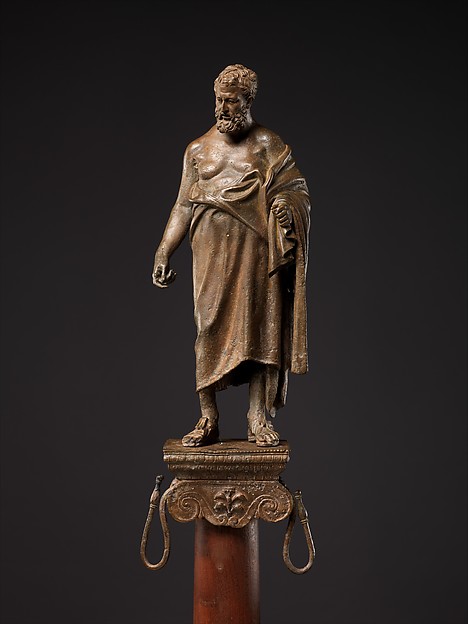
Identity becomes useful when an ordinary claim starts to wobble. A person says that an object stayed the same, that one event caused another, that something could have happened otherwise, or that two different things share one feature. At first the claim sounds harmless. Then the question appears: what must reality be like for that claim to make sense? Identity asks why a changing thing is still the same thing, and why two descriptions may or may not pick out one object. Reading Identity well means learning to see the hidden structure inside familiar speech.
Definition
Identity asks what makes something the same thing across time, change, description, or possible circumstances.
Why It Matters
Identity is best approached as a living philosophical tool rather than a dictionary label. It helps readers see how a problem, distinction, or tradition organizes arguments.
A careful reading of Identity requires attention to its historical setting, its rival interpretations, and the examples through which it becomes intelligible.
The concept matters because it connects abstract inquiry to recurring human questions about knowledge, value, reality, action, and meaning.
Historical Context
Classical metaphysics approached identity through substance, form, persistence, and the difference between essential and accidental change. Ancient and medieval metaphysics did not treat reality as a flat inventory of objects. It asked about being, form, matter, substance, cause, essence, participation, and dependence. Those words can sound remote, but they were attempts to explain why things are intelligible at all: why they persist, change, resemble one another, act on one another, and belong to kinds. Identity inherits that ambition.
Early modern philosophy changed the pressure on Identity. Scientific explanation, mathematical method, religious argument, and skepticism about perception forced philosophers to ask which parts of the old metaphysical vocabulary still earned their keep. Descartes, Spinoza, Leibniz, Locke, Hume, and Kant each reworked basic categories rather than merely repeating Aristotle. The result is a field in which old questions survive through new standards of explanation.
Modern puzzles about personal identity, replacement, memory, bodies, and possible worlds made identity a test for theories of persistence. Contemporary metaphysics often works with sharper logical tools and more explicit examples: possible worlds, identity puzzles, causal models, grounding, social objects, properties, persistence, and laws of nature. Yet the reader problem is still recognizable. We use words such as thing, same, cause, possible, property, event, and real every day. Metaphysics asks what those words commit us to when we stop using them casually.
Why Keep Reading
Debate Map
Identity as strict numerical sameness
Strict identity says that a thing is identical only with itself. If A is identical with B, every property of A is a property of B. This gives metaphysics a clear standard, but ordinary cases are messy. A repaired ship, a transformed body, or a changed person may preserve enough continuity for practical judgment even when strict sameness is hard to state.
Identity through continuity or relation
Other accounts emphasize psychological continuity, bodily continuity, causal history, function, or narrative organization. These accounts explain why change does not always destroy sameness. Their challenge is avoiding looseness: if continuity is enough, the theory must say which continuity matters and why.
How To Read This Concept Closely
When reading about Identity, pause whenever an author moves from an example to a category. The example may involve a statue, a ship, a color, a person, a law of nature, or a possible case. The category is the deeper point: object, property, cause, identity, essence, time, or necessity. The page becomes more readable when the example is treated as a test case rather than a decorative story.
Watch for whether the author is making an inventory claim or a structure claim. An inventory claim says what exists. A structure claim says how what exists is organized, grounded, related, or explained. Identity can belong to either mode. Confusing them makes metaphysics look like a list of strange objects, when much of the field is really about dependence, persistence, explanation, and conditions of intelligibility.
Keep the scale of the question clear. Some passages ask about ordinary objects; others ask about the most general categories reality could have. Some ask how language commits us; others ask what exists independently of language. A careful reader does not collapse these scales. The value of Identity is that it lets the reader move between everyday claims and the deeper structure those claims require.
How This Concept Works In Arguments
How This Concept Does Work
Identity is useful because it does more than name a topic. It gives a reader a way to sort examples, test claims, and notice where an argument is changing levels. In Reality and being, the term often marks a pressure point: one side treats the issue as a matter of definition, another side treats it as a problem of practice, and a third side asks what the concept hides when it is used too quickly.
A strong reading therefore asks what the concept explains, what it leaves unresolved, and which neighboring concepts it needs. On this page those neighbors include Metaphysics, Personal Identity, Time, and Substance. Reading them together prevents Identity from becoming an isolated label. It becomes part of a network of distinctions that can support essays, classroom discussion, and slower interpretation of primary texts.
How To Use It In An Argument
When you use Identity in an argument, begin by naming the problem it is meant to solve. Then ask whether the concept is being used descriptively, normatively, historically, or comparatively. This simple check keeps the discussion from sliding between different claims. It also helps explain why two writers may use similar language while disagreeing about what follows from it.
The safest essay move is to connect the definition to a concrete contrast. A paragraph can state the definition, show an example, introduce a misconception, and then compare Identity with one related idea. That pattern gives the reader enough structure to follow the argument without reducing the concept to a slogan or a dictionary sentence.
What To Notice In Sources
The sources for this page are not decoration. They show which institutions, reference works, and primary traditions make the concept stable enough to cite. Start with Stanford University, Stanford University, and OpenStax, then ask how each source frames the problem: as a historical development, a live debate, a textual interpretation, or a practical distinction. The differences between sources often reveal the concept's real shape.
When Aristotle, John Locke, David Hume, and Derek Parfit appear in connection with Identity, read them for the question they are answering, not only for a quotable sentence. Philosophical terms change meaning as they move across texts and problems. A careful reader tracks that movement and asks why this term, rather than a simpler one, became necessary.
A final source check is to ask what would count as misuse. If a source treats Identity as a technical term, the reader should not use it as a loose mood word. If a source treats it as a family of debates, the reader should name the debate rather than forcing one settled meaning too quickly.
Study Prompts
- 01What problem becomes harder to see if Identity is removed from the discussion?
- 02Which related concept most sharply changes how Identity should be read?
- 03Where does an example support the definition, and where does it strain it?
Key Questions
- 01What problem does Identity try to clarify?
- 02Which thinkers and traditions shaped Identity?
- 03How does Identity change the way readers understand philosophy?
Examples
- A reader can use Identity to distinguish a surface-level slogan from the deeper philosophical issue underneath it.
- In discussion, Identity helps connect an everyday problem to a tradition of argument rather than treating it as mere opinion.
Common Misconceptions
Identity has one simple meaning in every context.
Its meaning shifts across authors and traditions, so context matters.
Identity is only a historical term.
It remains useful because the problem it names still appears in contemporary debates.
Identity can be understood without related concepts.
It becomes clearer when placed beside neighboring and contrasting ideas.
FAQ
Why is Identity important?
It gives readers a stable entry point into a broader philosophical debate.
How should beginners read about Identity?
Begin with a concise definition, then compare examples, related concepts, and the main thinkers associated with it.
Suggested Reading Path
- Step 1
Start with the ordinary claim
Ask which everyday judgment makes Identity necessary: sameness, cause, possibility, existence, property-sharing, change, or persistence.
- Step 2
Find the contrast
Read Identity beside its nearest rival or neighbor. The key contrast is identity from similarity, numerical sameness from qualitative sameness, and persistence from mere continuity.
- Step 3
Test the category under pressure
Use a case of change, replacement, resemblance, counterfactual possibility, or causal failure. A metaphysical category becomes clear when an easy example stops being easy.
Questions To Think With
- What ordinary sentence secretly depends on Identity?
- Which contrast best prevents Identity from becoming too vague?
- Does this concept name something in reality, a structure of explanation, or a commitment in language?
- What example makes the concept difficult rather than merely abstract?
- How would a different account of Identity change debates in science, ethics, mind, religion, or law?
Where To Go Next
Sources
- Stanford Encyclopedia of Philosophy - IdentityStanford University - plato.stanford.edu
- Stanford Encyclopedia of Philosophy - Personal IdentityStanford University - plato.stanford.edu
- OpenStax - Personal IdentityOpenStax - openstax.org