Purusha
Purusha asks what it would mean for awareness to be fundamentally different from body, mind, and material change.
Short answer
Purusha asks what it would mean for awareness to be fundamentally different from body, mind, and material change.
Why it matters
Purusha belongs to Indian philosophy because it names a pressure that ordinary language often compresses. Purusha is pure consciousness or witnessing principle in Samkhya and Yoga, distinct from the changing processes of nature. The concept matters when a reader needs to move from a quick label to a judgment about reasons, practices, institutions, texts, or forms of life.
Example
A meditator observing thoughts as objects may be invited to distinguish witnessing awareness from mental activity.
Common confusion
Purusha has one simple meaning in every context. The concept changes across authors, traditions, and problems, so it should be read through its use and contrast.
Read this if
- You want Purusha explained through a real reader problem rather than a bare definition.
- You need to separate Purusha from prakriti, mind, self, and Atman.
- You want examples and sources before using Purusha in writing or discussion.
Core tension
The concept sounds manageable as a label, but it becomes serious when witnessing consciousness has to be interpreted through examples, sources, and neighboring terms.
Best for
Indian philosophy, concept mapping, comparison reading, and essay planning.
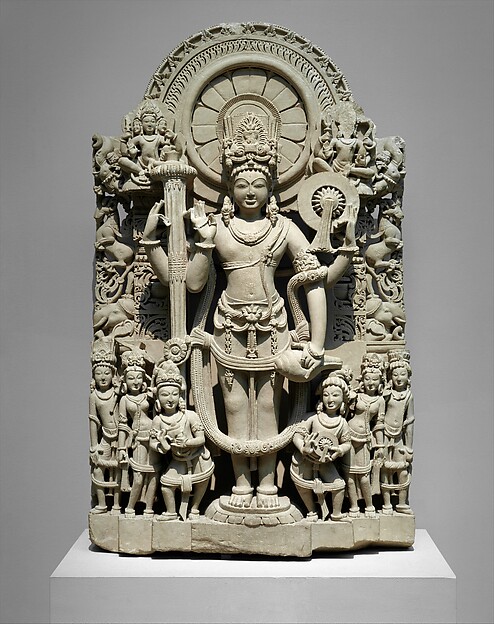
Start With The Human Problem
Purusha is worth reading because it helps a reader slow down at the exact point where a familiar word starts hiding a difficult problem. Purusha asks what it would mean for awareness to be fundamentally different from body, mind, and material change. The entry is not trying to turn the term into a slogan. It asks what the concept does, where it came from, which examples make it necessary, and what nearby terms can be confused with it. A reader who follows the page should be able to use Purusha in conversation, study, and writing without pretending that the word has only one settled use.
Definition
Purusha is pure consciousness or witnessing principle in Samkhya and Yoga, distinct from the changing processes of nature.
Why It Matters
Purusha belongs to Indian philosophy because it names a pressure that ordinary language often compresses. Purusha is pure consciousness or witnessing principle in Samkhya and Yoga, distinct from the changing processes of nature. The concept matters when a reader needs to move from a quick label to a judgment about reasons, practices, institutions, texts, or forms of life.
The central focus is witnessing consciousness. That focus keeps the page from becoming a detached definition. It asks what the concept is for, what it clarifies, and what kind of mistake becomes likely when the term is used too quickly.
A careful reading places Purusha beside prakriti, mind, self, and Atman. The neighboring terms do not simply decorate the entry; they test its boundary. A reader learns the concept by seeing what it can explain and what another concept explains better.
A meditator observing thoughts as objects may be invited to distinguish witnessing awareness from mental activity. This kind of example gives the term practical force. It shows why the concept remains useful for interpretation, self-study, teaching, public argument, and slower reading of sources.
Historical Context
Purusha has to be read through the history of Indian philosophy. That history includes texts, institutions, practices, and arguments that were not all trying to solve the same problem. The concept therefore changes shape as it moves between authors and settings. The safest starting point is to ask which problem made the term necessary in the first place and which later disputes gave it new force.
The historical frame is especially important because witnessing consciousness rarely appears in isolation. It is tied to examples, methods, and forms of authority. A term can begin in one tradition, travel into another, and then become a modern search phrase with only part of its older meaning intact. This page keeps the older pressure visible while still speaking to contemporary readers.
A second historical layer is the contrast with prakriti, mind, self, and Atman. Many philosophical concepts become readable only when their rival, neighbor, or mistaken substitute is visible. The contrast does not mean the other term is wrong. It means the reader should notice which question each term is built to answer and which assumptions each one carries into the discussion.
The concept also belongs to a public reading problem. Students, general readers, and searchers often arrive with a practical question before they know the technical vocabulary. A meditator observing thoughts as objects may be invited to distinguish witnessing awareness from mental activity. A good encyclopedia entry should respect that starting point and then help the reader move from the case to the deeper structure of the debate.
Finally, source-backed reading matters. Purusha is not included as a loose association but as part of a structured map with related concepts, sources, comparisons, and next reads. The page should help readers identify where a definition is stable, where disagreement remains, and where another page would give a sharper answer.
Why Keep Reading
Debate Map
Context-first reading
Purusha should be read through its historical use, institutional setting, and practical examples. This view resists one-sentence mastery and asks how the concept works inside a form of inquiry, practice, or public argument.
Problem-first reading
Purusha should begin from the live problem it helps solve: witnessing consciousness. This view is useful for readers who need the concept to clarify a case, not only to name a tradition.
Contrast-first reading
The concept becomes clearest when placed beside prakriti, mind, self, and Atman. This view treats distinctions as tools. It asks what changes when one term is used instead of a nearby term.
How To Read This Concept Closely
Begin by asking what kind of claim Purusha is making. Is it defining a category, judging a practice, interpreting a text, explaining experience, or guiding action? The answer changes how the page should be read. A definition that works for classification may not be enough for ethical judgment or historical interpretation.
Next, watch the examples. A meditator observing thoughts as objects may be invited to distinguish witnessing awareness from mental activity. If the example makes the concept clearer, ask why. Which part of the situation would be invisible without the concept? Which part still needs another term? This habit keeps reading active and prevents the example from becoming decorative.
Then compare the concept with prakriti, mind, self, and Atman. A close reading should name not only the difference but the cost of confusion. What would a reader misunderstand if the terms were treated as synonyms? What would become too broad, too narrow, or too moralized?
Finally, return to the sources and next reads. A source may frame Purusha as a historical development, a live debate, a practical distinction, or a technical term. The reader should notice the frame before using the source as support. That source check is what turns a quick reference page into a reliable study route.
How This Concept Works In Arguments
How This Concept Does Work
Purusha is useful because it does more than name a topic. It gives a reader a way to sort examples, test claims, and notice where an argument is changing levels. In Indian philosophy, the term often marks a pressure point: one side treats the issue as a matter of definition, another side treats it as a problem of practice, and a third side asks what the concept hides when it is used too quickly.
A strong reading therefore asks what the concept explains, what it leaves unresolved, and which neighboring concepts it needs. On this page those neighbors include Samkhya, Prakriti, Yoga, and Consciousness. Reading them together prevents Purusha from becoming an isolated label. It becomes part of a network of distinctions that can support essays, classroom discussion, and slower interpretation of primary texts.
How To Use It In An Argument
When you use Purusha in an argument, begin by naming the problem it is meant to solve. Then ask whether the concept is being used descriptively, normatively, historically, or comparatively. This simple check keeps the discussion from sliding between different claims. It also helps explain why two writers may use similar language while disagreeing about what follows from it.
The safest essay move is to connect the definition to a concrete contrast. A paragraph can state the definition, show an example, introduce a misconception, and then compare Purusha with one related idea. That pattern gives the reader enough structure to follow the argument without reducing the concept to a slogan or a dictionary sentence.
What To Notice In Sources
The sources for this page are not decoration. They show which institutions, reference works, and primary traditions make the concept stable enough to cite. Start with University of Tennessee at Martin, OpenStax, and Encyclopaedia Britannica, then ask how each source frames the problem: as a historical development, a live debate, a textual interpretation, or a practical distinction. The differences between sources often reveal the concept's real shape.
When Kapila, Ishvarakrishna, and Patanjali appear in connection with Purusha, read them for the question they are answering, not only for a quotable sentence. Philosophical terms change meaning as they move across texts and problems. A careful reader tracks that movement and asks why this term, rather than a simpler one, became necessary.
A final source check is to ask what would count as misuse. If a source treats Purusha as a technical term, the reader should not use it as a loose mood word. If a source treats it as a family of debates, the reader should name the debate rather than forcing one settled meaning too quickly.
Study Prompts
- 01What problem becomes harder to see if Purusha is removed from the discussion?
- 02Which related concept most sharply changes how Purusha should be read?
- 03Where does an example support the definition, and where does it strain it?
Key Questions
- 01What problem does Purusha help readers see more clearly?
- 02How does Purusha change when it is compared with prakriti, mind, self, and Atman?
- 03Which examples show why Purusha is more than a vocabulary term?
Examples
- A meditator observing thoughts as objects may be invited to distinguish witnessing awareness from mental activity.
- In a seminar or essay, Purusha can be used to separate a broad question from a more precise dispute about witnessing consciousness.
Common Misconceptions
Purusha has one simple meaning in every context.
The concept changes across authors, traditions, and problems, so it should be read through its use and contrast.
Purusha is only a specialist term.
It matters because it clarifies examples that readers can recognize in institutions, arguments, art, practice, or ordinary judgment.
Purusha can be understood without nearby concepts.
The clearest reading comes from comparing it with prakriti, mind, self, and Atman and then testing the difference against examples.
FAQ
Why is Purusha important?
It gives readers a stable way to analyze witnessing consciousness without reducing the issue to a slogan or private reaction.
What should beginners compare it with?
Begin with prakriti, mind, self, and Atman, then follow the related concepts listed on this page.
How should Purusha be used in writing?
State the definition, add one concrete example, name the nearby concept it should not be confused with, and then explain what the distinction changes.
Suggested Reading Path
- Step 1
Start with the concise answer for Purusha
Use the concise answer to identify the main problem: witnessing consciousness. Do not treat it as the final word. Treat it as the first handle on a larger debate.
- Step 2
Read the detailed examples
Examples show where the concept earns its place. The key test is whether the concept changes how the case is interpreted, judged, or explained.
- Step 3
Follow the strongest contrast
Compare the page with prakriti, mind, self, and Atman. This contrast helps a reader avoid the most likely confusion and build a sharper essay or discussion point.
- Step 4
Use sources and next reads
Open at least one source and one related concept. That second move keeps the page from becoming an isolated definition and turns it into a route through the field.
Questions To Think With
- What does Purusha make visible that ordinary language tends to hide?
- Which part of A meditator observing thoughts as objects may be invited to distinguish witnessing awareness from mental activity. would be hardest to explain without this concept?
- Where does Purusha overlap with prakriti, mind, self, and Atman, and where must the distinction be preserved?
- Which source would you consult first if you needed to use Purusha in an essay?
- What misconception would make this concept too simple?
- Which related concept should be read next, and what question would it answer?
Where To Go Next
Sources
- Internet Encyclopedia of Philosophy - Hindu PhilosophyUniversity of Tennessee at Martin - iep.utm.edu
- OpenStax - Classical Indian PhilosophyOpenStax - openstax.org
- Encyclopaedia Britannica - Indian PhilosophyEncyclopaedia Britannica - britannica.com