Utilitarianism
The right action is often understood as the one that produces the best overall consequences.
Short answer
The right action is often understood as the one that produces the best overall consequences.
Why it matters
Utilitarianism is best approached as a living philosophical tool rather than a dictionary label. It helps readers see how a problem, distinction, or tradition organizes arguments.
Example
A reader can use Utilitarianism to distinguish a surface-level slogan from the deeper philosophical issue underneath it.
Common confusion
Utilitarianism has one simple meaning in every context. Its meaning shifts across authors and traditions, so context matters.
Read this if
- You want a plain-English entry point into Utilitarianism.
- You need examples before moving into primary texts or specialist debates.
- You are mapping how Utilitarianism connects to nearby ideas in Ethics.
Core tension
The concept looks simple as a label, but becomes clearer only when its contrasts and examples are visible.
Best for
Ethics, comparative reading, essay planning, and concept mapping.
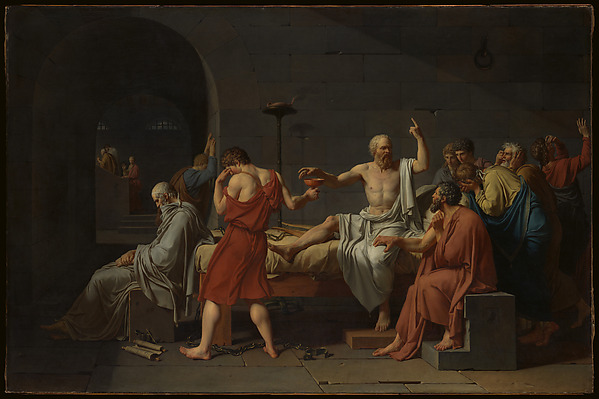
Start With The Human Problem
Utilitarianism asks a simple but demanding question: what action will produce the greatest net good? Framed as a decision procedure and a moral ideal, it measures choices by their consequences for well-being rather than by intentions, rules, or status. That practicality has drawn policymakers, activists, and thinkers who want a clear yardstick for moral tension. Yet utilitarian thought does not only calculate; it also presses on empathy, trade-offs, and the limits of impartiality. Reading utilitarianism means testing how we value pleasures, pains, rights, and duties when they collide, and examining how aggregate benefit shapes moral responsibility.
Definition
The right action is often understood as the one that produces the best overall consequences.
Why It Matters
Utilitarianism is best approached as a living philosophical tool rather than a dictionary label. It helps readers see how a problem, distinction, or tradition organizes arguments.
A careful reading of Utilitarianism requires attention to its historical setting, its rival interpretations, and the examples through which it becomes intelligible.
The concept matters because it connects abstract inquiry to recurring human questions about knowledge, value, reality, action, and meaning.
Historical Context
The roots of utilitarian thought extend to ancient remarks about collective welfare, but its modern form crystallized in the 18th and 19th centuries. Jeremy Bentham presented utility as the foundation of legislation, advocating that laws should promote the greatest happiness of the greatest number. Bentham developed a quasi-scientific method, proposing that pleasures and pains could be compared and weighed to inform policy. His emphasis on measurable outcomes and reform made utilitarianism attractive to advocates of legal and social change.
John Stuart Mill refined utilitarianism, responding to critics and introducing qualitative distinctions among pleasures. Mill argued that higher intellectual and aesthetic pleasures could outweigh mere sensual pleasures, and he defended individual liberties as essential for human development. Mill’s essay On Liberty reframed utility to protect minority rights against majoritarian tyranny, showing how utility and rights could coexist under a broader conception of human flourishing. This move made utilitarianism philosophically richer and politically more defensible, while opening new debates about value, dignity, and social progress.
In the twentieth century utilitarianism diversified. Act utilitarians emphasized case-by-case calculations of outcomes; rule utilitarians argued for adopting rules that maximize welfare in the long run. Philosophers like Henry Sidgwick and later R. M. Hare grappled with impartiality, motivation, and the demands of moral reasoning. Contemporary thinkers have applied utilitarian frameworks to global ethics, population policy, and economics, connecting philosophical claims to empirical data and decision theory. These developments shifted utilitarianism from a single doctrine to a family of approaches that continue to influence moral and public debate.
Why Keep Reading
Debate Map
Act versus Rule Utilitarianism
Act utilitarianism judges each action by its expected consequences, seeking the choice that maximizes welfare in the specific situation. Rule utilitarianism instead endorses rules that, when generally followed, produce the best outcomes. Supporters of act versions value flexibility and context; defenders of rule approaches stress predictability, trust, and the moral psychology needed to sustain beneficial norms. The dispute hinges on whether the practical advantages of rules override the theoretical appeal of direct consequential calculation and how exceptions ought to be handled.
Utility versus Rights
A central worry is that utilitarian calculations might justify violating individual rights for the greater good. Critics claim that treating persons as means to aggregate welfare undermines moral dignity. Some utilitarians respond by reconceiving rights as instruments that generally maximize utility—protecting rights prevents social harms and preserves cooperation. Others propose hybrid theories that anchor rights in deeper moral concerns while retaining a consequentialist orientation for policy, seeking a balance between aggregate benefit and protections for individuals.
How To Read This Concept Closely
Examine the utilitarian commitment to impartiality: every person’s welfare counts equally in the calculus. This helps clarify moral intuitions about charity and global obligations, but it also demands difficult sacrifices from agents whose personal projects conflict with the impartial ideal. Philosophers ask whether impartiality is psychologically attainable and whether moral theory should demand more than people can reasonably give. The issue forces a tension between aspirational ethics and practical moral psychology.
Consider the role of measurement and uncertainty. Utilitarians often rely on estimates: probabilities, intensities of pleasure or pain, and comparisons across lives. Decision theory and statistics can guide these assessments, yet empirical limits complicate moral calculation. Debates arise over interpersonal comparisons of utility—how to weigh the welfare of different people and generations—and over how to treat non-quantifiable values like dignity or love within a consequentialist framework.
Finally, inspect critiques about demandingness and special obligations. Utilitarianism can prescribe large sacrifices for marginal gains in aggregate welfare, prompting objections that it is overly demanding or that it neglects special moral ties. Responses range from narrowing the scope of moral requirement through threshold accounts to defending a demanding ethic as morally coherent. Close reading here reveals that utilitarian debates are not merely technical; they reflect competing visions of what moral life asks of us.
How This Concept Works In Arguments
How This Concept Does Work
Utilitarianism is useful because it does more than name a topic. It gives a reader a way to sort examples, test claims, and notice where an argument is changing levels. In Ethics, the term often marks a pressure point: one side treats the issue as a matter of definition, another side treats it as a problem of practice, and a third side asks what the concept hides when it is used too quickly.
A strong reading therefore asks what the concept explains, what it leaves unresolved, and which neighboring concepts it needs. On this page those neighbors include Consequentialism, Ethics, and Happiness. Reading them together prevents Utilitarianism from becoming an isolated label. It becomes part of a network of distinctions that can support essays, classroom discussion, and slower interpretation of primary texts.
How To Use It In An Argument
When you use Utilitarianism in an argument, begin by naming the problem it is meant to solve. Then ask whether the concept is being used descriptively, normatively, historically, or comparatively. This simple check keeps the discussion from sliding between different claims. It also helps explain why two writers may use similar language while disagreeing about what follows from it.
The safest essay move is to connect the definition to a concrete contrast. A paragraph can state the definition, show an example, introduce a misconception, and then compare Utilitarianism with one related idea. That pattern gives the reader enough structure to follow the argument without reducing the concept to a slogan or a dictionary sentence.
What To Notice In Sources
The sources for this page are not decoration. They show which institutions, reference works, and primary traditions make the concept stable enough to cite. Start with Stanford University, University of Tennessee at Martin, and OpenStax, then ask how each source frames the problem: as a historical development, a live debate, a textual interpretation, or a practical distinction. The differences between sources often reveal the concept's real shape.
When John Stuart Mill, and Jeremy Bentham appear in connection with Utilitarianism, read them for the question they are answering, not only for a quotable sentence. Philosophical terms change meaning as they move across texts and problems. A careful reader tracks that movement and asks why this term, rather than a simpler one, became necessary.
A final source check is to ask what would count as misuse. If a source treats Utilitarianism as a technical term, the reader should not use it as a loose mood word. If a source treats it as a family of debates, the reader should name the debate rather than forcing one settled meaning too quickly.
Study Prompts
- 01What problem becomes harder to see if Utilitarianism is removed from the discussion?
- 02Which related concept most sharply changes how Utilitarianism should be read?
- 03Where does an example support the definition, and where does it strain it?
Key Questions
- 01What problem does Utilitarianism try to clarify?
- 02Which thinkers and traditions shaped Utilitarianism?
- 03How does Utilitarianism change the way readers understand philosophy?
Examples
- A reader can use Utilitarianism to distinguish a surface-level slogan from the deeper philosophical issue underneath it.
- In discussion, Utilitarianism helps connect an everyday problem to a tradition of argument rather than treating it as mere opinion.
Common Misconceptions
Utilitarianism has one simple meaning in every context.
Its meaning shifts across authors and traditions, so context matters.
Utilitarianism is only a historical term.
It remains useful because the problem it names still appears in contemporary debates.
Utilitarianism can be understood without related concepts.
It becomes clearer when placed beside neighboring and contrasting ideas.
FAQ
Why is Utilitarianism important?
It gives readers a stable entry point into a broader philosophical debate.
How should beginners read about Utilitarianism?
Begin with a concise definition, then compare examples, related concepts, and the main thinkers associated with it.
Suggested Reading Path
- Step 1
Read primary texts
Begin with Bentham’s essays and Mill’s On Liberty to see how utilitarian principles were first formulated and defended; their arguments reveal foundational commitments and the historical context that shaped later adaptations.
- Step 2
Study contemporary critiques and applications
Move to modern discussions—act vs. rule, rights critiques, and applied utilitarian work on global ethics and risk—to see how the theory handles complex real-world problems and how scholars respond to its pressures.
Questions To Think With
- When should aggregate welfare outweigh an individual's rights, if ever?
- How plausible is the idea that pleasures and pains can be measured and compared across people?
- Does impartiality demand too much of ordinary moral agents?
- Can rule-based protections of liberty be justified within a consequentialist framework?
- How should future generations factor into our moral calculations?
Where To Go Next
Sources
- Stanford Encyclopedia of Philosophy - The History of UtilitarianismStanford University - plato.stanford.edu
- Internet Encyclopedia of Philosophy - Act and Rule UtilitarianismUniversity of Tennessee at Martin - iep.utm.edu
- OpenStax - Moral Theory and Its ApplicationOpenStax - openstax.org