Expertise
Expertise is reliable, cultivated judgment within a domain, but it creates hard questions about trust, disagreement, and public authority.
Short answer
Expertise is reliable, cultivated judgment within a domain, but it creates hard questions about trust, disagreement, and public authority.
Why it matters
Expertise is best approached as a living philosophical tool rather than a dictionary label. It helps readers see how a problem, distinction, or tradition organizes arguments.
Example
A reader can use Expertise to distinguish a surface-level slogan from the deeper philosophical issue underneath it.
Common confusion
Expertise has one simple meaning in every context. Its meaning shifts across authors and traditions, so context matters.
Read this if
- You want to know when expert authority should be trusted.
- You are studying science, institutions, disagreement, credentials, or public reasoning.
- You need to separate domain competence from status, confidence, or popularity.
Core tension
Expertise is necessary because knowledge is specialized, yet expert authority must remain limited, accountable, and open to correction.
Best for
Public trust, science, medicine, policy, institutions, and applied epistemology.
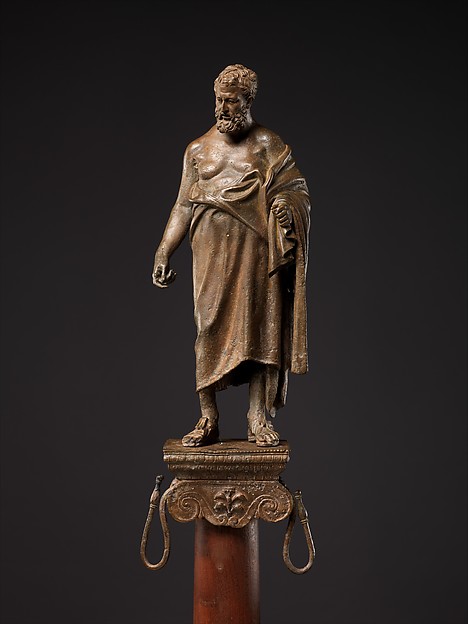
Start With The Human Problem
Expertise becomes urgent whenever a person has to decide what to trust. The issue may look abstract, but it appears in ordinary scenes: reading a medical claim, accepting a teacher's explanation, revising a belief after new reasons, or asking whether a confident answer is actually grounded. Expertise asks when specialized judgment deserves trust, especially by people who cannot independently check the full argument. A good reading of Expertise therefore does more than define a term. It shows how inquiry, responsibility, error, and trust fit together.
Definition
Expertise is reliable, cultivated judgment within a domain, but it creates hard questions about trust, disagreement, and public authority.
Why It Matters
Expertise is best approached as a living philosophical tool rather than a dictionary label. It helps readers see how a problem, distinction, or tradition organizes arguments.
A careful reading of Expertise requires attention to its historical setting, its rival interpretations, and the examples through which it becomes intelligible.
The concept matters because it connects abstract inquiry to recurring human questions about knowledge, value, reality, action, and meaning.
Historical Context
Classical philosophy already distinguished craft, practical wisdom, and theoretical knowledge, raising questions about trained judgment. Ancient philosophy often treated knowledge as more than successful opinion because true belief can still be lucky, unstable, or poorly grounded. Plato's dialogues made that pressure vivid by asking why correct opinion is not yet the same as knowledge. Aristotle's work on demonstration and explanation added another pressure: knowing often means grasping why something is so, not only that it is so. These early debates still shape how readers approach Expertise, because they separate possession of a claim from responsible understanding.
Expertise changed shape in early modern philosophy as thinkers confronted skepticism, science, perception, and method. Descartes asked what could survive radical doubt. Hume pressed questions about habit, induction, and the limits of reason. Later empiricists and rationalists disagreed about whether experience, reason, or some combination gives inquiry its authority. In this setting, Expertise is not a museum term. It is a way of asking how finite minds can answer to the world without pretending to possess impossible certainty.
Modern societies depend on technical expertise in medicine, law, engineering, science, policy, and risk assessment. Contemporary epistemology also widened the field from individual certainty to social dependence. Testimony, expertise, disagreement, bias, and institutions now matter because much of what anyone knows comes through others. This shift makes Expertise relevant to public life: science communication, courts, journalism, education, medical trust, and digital misinformation. The concept has become a bridge between classical questions about truth and practical questions about how communities decide what deserves confidence.
Why Keep Reading
Debate Map
Expertise as reliable competence
This position understands expertise as domain-specific competence formed by training, feedback, methods, and a track record of successful judgment. It avoids treating expertise as mere credential. The difficulty is that non-experts often cannot directly inspect the competence, so they need indirect signs: institutional accountability, peer review, transparency, and patterns of error correction.
Expertise as socially embedded authority
Another view stresses that expertise functions inside institutions and publics. Experts do not only know; they advise, warn, teach, and justify decisions. This makes trust political as well as epistemic. Critics worry about technocracy or captured institutions, while defenders argue that rejecting expertise because it is social misunderstands how complex knowledge is produced and checked.
How To Read This Concept Closely
When reading about Expertise, watch for the verb that carries the argument. Does the author say a belief is known, justified, warranted, reliable, true, accepted, trusted, or merely asserted? Those verbs are not decorative. They mark different standards. A close reading should pause whenever the text moves from a psychological state to a normative claim, because that move is where the philosophy usually happens.
Look for examples in which success and responsibility come apart. A lucky guess, a true rumor, a competent expert, a biased witness, and a well-supported but false scientific hypothesis each test a different part of Expertise. These examples stop the entry from becoming a slogan. They show why philosophers need distinctions among truth, belief, support, method, credibility, and understanding.
Pay attention to scale. Some passages discuss the individual thinker facing doubt; others discuss communities, institutions, and inherited trust. A strong interpretation does not force one scale to replace the other. It asks how personal responsibility and social dependence interact. That question is especially useful when Expertise is applied to schools, medicine, law, media, or public reasoning.
How This Concept Works In Arguments
How This Concept Does Work
Expertise is useful because it does more than name a topic. It gives a reader a way to sort examples, test claims, and notice where an argument is changing levels. In Knowledge, the term often marks a pressure point: one side treats the issue as a matter of definition, another side treats it as a problem of practice, and a third side asks what the concept hides when it is used too quickly.
A strong reading therefore asks what the concept explains, what it leaves unresolved, and which neighboring concepts it needs. On this page those neighbors include Testimony, Knowledge, Trust, and Public Reason. Reading them together prevents Expertise from becoming an isolated label. It becomes part of a network of distinctions that can support essays, classroom discussion, and slower interpretation of primary texts.
How To Use It In An Argument
When you use Expertise in an argument, begin by naming the problem it is meant to solve. Then ask whether the concept is being used descriptively, normatively, historically, or comparatively. This simple check keeps the discussion from sliding between different claims. It also helps explain why two writers may use similar language while disagreeing about what follows from it.
The safest essay move is to connect the definition to a concrete contrast. A paragraph can state the definition, show an example, introduce a misconception, and then compare Expertise with one related idea. That pattern gives the reader enough structure to follow the argument without reducing the concept to a slogan or a dictionary sentence.
What To Notice In Sources
The sources for this page are not decoration. They show which institutions, reference works, and primary traditions make the concept stable enough to cite. Start with Stanford University, Stanford University, and University of Tennessee at Martin, then ask how each source frames the problem: as a historical development, a live debate, a textual interpretation, or a practical distinction. The differences between sources often reveal the concept's real shape.
When Aristotle, Alvin Goldman, and Elizabeth Anderson appear in connection with Expertise, read them for the question they are answering, not only for a quotable sentence. Philosophical terms change meaning as they move across texts and problems. A careful reader tracks that movement and asks why this term, rather than a simpler one, became necessary.
A final source check is to ask what would count as misuse. If a source treats Expertise as a technical term, the reader should not use it as a loose mood word. If a source treats it as a family of debates, the reader should name the debate rather than forcing one settled meaning too quickly.
Study Prompts
- 01What problem becomes harder to see if Expertise is removed from the discussion?
- 02Which related concept most sharply changes how Expertise should be read?
- 03Where does an example support the definition, and where does it strain it?
Key Questions
- 01What problem does Expertise try to clarify?
- 02Which thinkers and traditions shaped Expertise?
- 03How does Expertise change the way readers understand philosophy?
Examples
- A reader can use Expertise to distinguish a surface-level slogan from the deeper philosophical issue underneath it.
- In discussion, Expertise helps connect an everyday problem to a tradition of argument rather than treating it as mere opinion.
Common Misconceptions
Expertise has one simple meaning in every context.
Its meaning shifts across authors and traditions, so context matters.
Expertise is only a historical term.
It remains useful because the problem it names still appears in contemporary debates.
Expertise can be understood without related concepts.
It becomes clearer when placed beside neighboring and contrasting ideas.
FAQ
Why is Expertise important?
It gives readers a stable entry point into a broader philosophical debate.
How should beginners read about Expertise?
Begin with a concise definition, then compare examples, related concepts, and the main thinkers associated with it.
Suggested Reading Path
- Step 1
Start with the basic contrast
Read Expertise beside its nearest neighbor. The point is to see what the concept adds and what it does not try to do. expertise from status, authority from evidence, and deference from passive obedience is the first distinction to keep in view.
- Step 2
Test the concept with examples
Use a lucky true belief, a trusted witness, a skeptical challenge, and a disagreement between experts. If the concept can handle these cases, it is becoming usable rather than merely memorized.
- Step 3
Follow the social question
Move from the individual case to the public need to decide when to trust specialists, how to handle expert disagreement, and when institutions have earned credibility. This makes the concept relevant to contemporary readers without losing its philosophical structure.
Questions To Think With
- What would make a confident claim about Expertise irresponsible?
- Where does Expertise depend on other people rather than private reflection alone?
- Which example best shows the difference between truth, belief, and justification here?
- How should a reader revise confidence when new reasons or credible disagreement appears?
- What does Expertise change about how public institutions should earn trust?
Where To Go Next
Sources
- Stanford Encyclopedia of Philosophy - ExpertiseStanford University - plato.stanford.edu
- Stanford Encyclopedia of Philosophy - Social EpistemologyStanford University - plato.stanford.edu
- Internet Encyclopedia of Philosophy - Social EpistemologyUniversity of Tennessee at Martin - iep.utm.edu
- OpenStax - Knowledge as a Social EnterpriseOpenStax - openstax.org