Topic route

Knowledge, Evidence, and Trust

This topic cluster is for readers who want to understand how philosophy separates knowing from guessing, confidence from evidence, and trustworthy authority from empty status. It begins with individual belief, then widens into social questions about testimony, expertise, disagreement, and public trust.

Concepts
10
Guides
2
Comparisons
4
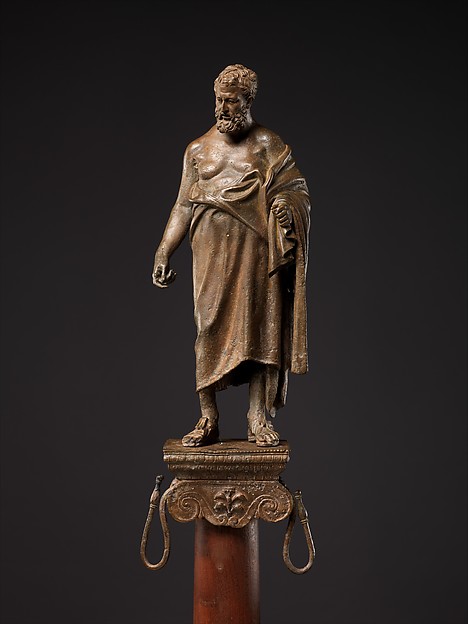
Roman bronze statuette of a philosopher on a lamp stand
A Roman philosopher figure gives metaphysics pages a material image of inquiry, form, and ancient study.

Cluster summary

What this topic helps you understand.

Start a guide

Core problem

A route through knowledge, truth, belief, justification, skepticism, testimony, and expertise.

Best comparison

Knowledge vs Belief

Use a contrast when the topic starts to feel like a list of related but interchangeable terms.

The reader problem

Most readers do not first meet epistemology in a classroom. They meet it when two confident people disagree, when an expert asks for trust, when a rumor turns out true, or when evidence changes a settled view. This topic makes those moments readable.

The learning path

Start with knowledge and belief, then add truth and justification. Skepticism tests the standards. Testimony and expertise move the problem from the private mind into social life, institutions, and public disagreement.

Why this cluster matters

Questions about evidence, trust, science, media, disagreement, and authority are not separate from classical epistemology. They are where the old problems become visible in ordinary life.

Questions this topic answers

A good first pass

Do not try to read everything at once.

Start with a few concrete entries, test one hard distinction, and then use the guide to decide what deserves slower reading. That order keeps a large subject from turning into a wall of links.

How The Ideas Fit Together

How To Begin

Begin Knowledge, Evidence, and Trust with one question you can actually carry: What changes when a belief becomes knowledge? That question gives the route pressure. Without it, the subject can look like a shelf of important words with no order.

A good first pass uses three moves. Read one broad concept for orientation, open one comparison to catch a likely confusion, then return to the topic and choose a guide. That rhythm keeps the subject readable because every next page has a job.

Do not worry about finishing the whole route in one sitting. A large subject becomes useful when a later concept changes how an earlier one sounds. Mark that change. It is often where the real philosophical work begins.

One simple note-taking habit helps: after each page, write down the sentence you would now revise. Maybe a definition needs a qualification, maybe an example no longer fits, or maybe a contrast has become more important than the original term. Those revisions show the subject becoming live rather than merely longer.

If the route feels too abstract, choose one ordinary scene and carry it through the whole topic. Ask how each concept would describe that same scene differently. A subject becomes easier to remember when its terms compete over a shared example instead of floating as separate definitions, and the shared example gives later rereading a concrete anchor for notes, discussion, and essay planning.

The Main Tensions

The central tension is the gap between a quick answer and a careful use. Each concept can be summarized, but summary alone does not show when the idea matters. The deeper work is to ask what changes when the concept is applied to an example, a text, a moral choice, or a historical debate.

The comparisons are stress tests, not decorative side paths. Knowledge vs Belief, Truth vs Justification, Testimony vs Expertise, and Empiricism vs Rationalism show where readers are likely to blur nearby ideas and where a more precise vocabulary changes the interpretation.

The guides give the subject sequence. Knowledge, Evidence, and Trust, and Philosophy Beginner Concepts help a reader decide what must come first, what can wait, and which distinction should be tested before moving on.

How This Helps Research

A research-minded reader can use this topic as an outline. The lead supplies the broad framing, the concept entries supply terms, the comparison pages supply thesis contrasts, and the guide pages supply order. Taken together, those pieces can become an essay plan, a seminar handout, or a self-study route.

The best use is iterative. Read one concept, write down the question it answers, then move to the next concept and ask what it changes. When the answer changes, the reader has found a real philosophical relation rather than a loose association. That relation is the unit of understanding this encyclopedia is trying to make visible.

For cross-tradition subjects, keep translation and setting visible. Some terms travel easily; others resist direct substitution. A useful note names the resistance without turning it into mystique or jargon.

Reading Order And Coverage

The safest first pass is to read from the broadest term toward the most contested one. Broad terms give orientation; contested terms reveal where the field becomes philosophically interesting. If the page feels large, begin with three concepts, one guide, and one comparison. That smaller route is enough to show the structure without turning the topic into a checklist.

A second pass should move in the opposite direction. Start with a specific confusion, then climb back to the wider cluster. This is often how readers actually learn philosophy: a puzzle about one term opens into a question about method, history, or evaluation. The topic page is meant to support that back-and-forth movement.

Coverage matters, but coverage is not the same as volume. A large topic is strong when it shows why each piece belongs. Concepts explain the vocabulary, guides explain sequence, comparisons explain boundaries, and sources explain trust. When all four appear together, the reader can see both breadth and shape.

How The Topic Can Grow

This cluster is designed to grow by adding depth along existing lines rather than by scattering disconnected pages. New entries should answer a missing reader question, clarify a neighboring term, or extend a tradition already named by the topic. That growth pattern keeps the page comprehensive without making it feel random.

The most valuable additions are usually not the most famous words. They are the terms that connect schools, arguments, and practices. A reader who understands those connecting terms can move from one page to another with a reason, not only with curiosity.

As the topic expands, the guiding test remains simple: can a reader tell what to read first, what to read next, and why the next page belongs here? If the answer is yes, the cluster is becoming an encyclopedia section rather than a directory.

What A Complete Pass Should Notice

A complete pass through this topic should notice at least four layers. The first layer is vocabulary: what the major terms mean and how they are normally introduced. The second layer is method: what kind of question each term is built to answer. The third layer is history: why the issue appears in this tradition, text, or debate. The fourth layer is application: what changes when the concept is used on an example.

Those layers prevent two common reading failures. One failure is treating the topic as a set of names to memorize. The other is treating every page as if it made the same kind of claim. Some pages define, some distinguish, some narrate a historical shift, and some ask the reader to test a practice or argument. Seeing the difference makes the cluster easier to study and easier to return to.

The reader should also watch for scale. A concept may look simple in a short definition and become difficult inside a text, institution, ritual, scientific debate, or moral conflict. Topic pages are where that change of scale becomes visible. They show how an idea moves from a sentence to a field of use.

The final check is whether the topic has changed the reader's questions. If the only result is a larger vocabulary, the pass was incomplete. If the reader can now ask sharper questions, locate better contrasts, and choose a more precise next page, the topic has done real educational work.

Questions To Carry Forward

A reader should carry three kinds of questions through this topic. The first kind asks for meaning: what does the term say, and what does it exclude? The second asks for use: what work does the term do inside an argument, practice, or interpretation? The third asks for limits: where does the term stop helping, and what other idea has to enter the discussion?

These questions are deliberately simple because they can travel across very different pages. They work for ancient texts, modern theories, religious traditions, political arguments, and classroom examples. A topic becomes easier to navigate when the reader can use the same small set of questions without flattening the differences between pages.

The carry-forward question also helps with memory. After reading a concept, write the one question that remains unresolved. Then open a guide or comparison page that seems likely to answer it. If the next page changes the question rather than merely answering it, the reader has found one of the deeper connections in the cluster.

This habit keeps the topic from feeling endless. Large coverage can become tiring when every link feels equally urgent. Questions create priority. They help the reader decide which concept matters now, which one can wait, and which comparison is needed before the next page will make sense.

A mature reading path ends with a better question than it began with. That is the mark of a rich topic page: it gives enough structure to orient the reader and enough openness to make further reading feel necessary rather than forced.

How To Know Where You Are

At any point in the topic, the reader should be able to answer a location question: am I reading a definition, a contrast, a historical bridge, or an application? Naming the location keeps the page from becoming a stream of information. It tells the reader what kind of attention the next section requires.

This matters most in broad topics where several traditions or subfields meet. A term may belong to one tradition by origin, another by later interpretation, and a third by classroom use. The topic page helps by placing the term beside guides and comparisons that make those movements easier to see.

The location question also supports returning readers. Someone who comes back after a week should not have to restart from the top. Clear sections, linked concepts, and repeated questions let the reader re-enter the topic at the right depth.

The strongest pages make that re-entry feel natural. A reader can skim the questions, open a concept, compare two terms, and then return with a sharper sense of what the topic is organizing.

That rhythm is what makes a large encyclopedia page readable. It offers breadth without asking the reader to absorb everything at once, and it offers depth without hiding the path back to the main question. It also lets a beginner and an advanced reader use the same page differently, with different levels of attention, rereading, purpose, patience, context, and prior knowledge.
Where Each Idea Starts

Knowledge

01

Knowledge is step 1 in this topic because it gives the reader a specific handle on the cluster's larger question. Knowledge is not just a belief that happens to be true; it is a responsible relation to truth, evidence, and the world.

Read Knowledge with attention to its field, Knowledge, and to its related terms: Epistemology, Truth, and Belief. Those links show where the idea stops being a definition and becomes part of a larger argument.

A useful note-taking move is to write one sentence beginning with "This concept matters because..." and then revise that sentence after reading one related page. The revision is the point: it shows how understanding changes when a concept is placed inside a larger network.

Truth

02

Truth is step 2 in this topic because it gives the reader a specific handle on the cluster's larger question. Truth is the aim of inquiry and assertion: the standard by which claims answer to reality, coherence, practice, or disclosure.

Read Truth with attention to its field, Knowledge, and to its related terms: Knowledge, Belief, and Realism. Those links show where the idea stops being a definition and becomes part of a larger argument.

A useful note-taking move is to write one sentence beginning with "This concept matters because..." and then revise that sentence after reading one related page. The revision is the point: it shows how understanding changes when a concept is placed inside a larger network.

Belief

03

Belief is step 3 in this topic because it gives the reader a specific handle on the cluster's larger question. Belief is an attitude of taking something to be the case, whether or not it is true, justified, certain, or consciously chosen.

Read Belief with attention to its field, Knowledge, and to its related terms: Knowledge, Truth, and Justification. Those links show where the idea stops being a definition and becomes part of a larger argument.

A useful note-taking move is to write one sentence beginning with "This concept matters because..." and then revise that sentence after reading one related page. The revision is the point: it shows how understanding changes when a concept is placed inside a larger network.

Justification

04

Justification is step 4 in this topic because it gives the reader a specific handle on the cluster's larger question. Justification is what makes a belief rational, warranted, or responsibly held rather than merely guessed, inherited, or lucky.

Read Justification with attention to its field, Knowledge, and to its related terms: Knowledge, Belief, and Evidence. Those links show where the idea stops being a definition and becomes part of a larger argument.

A useful note-taking move is to write one sentence beginning with "This concept matters because..." and then revise that sentence after reading one related page. The revision is the point: it shows how understanding changes when a concept is placed inside a larger network.

Skepticism

05

Skepticism is step 5 in this topic because it gives the reader a specific handle on the cluster's larger question. Skepticism challenges whether our claims to knowledge are secure, forcing philosophy to test evidence, certainty, and standards of inquiry.

Read Skepticism with attention to its field, Knowledge, and to its related terms: Knowledge, Justification, and Doubt. Those links show where the idea stops being a definition and becomes part of a larger argument.

A useful note-taking move is to write one sentence beginning with "This concept matters because..." and then revise that sentence after reading one related page. The revision is the point: it shows how understanding changes when a concept is placed inside a larger network.

Testimony

06

Testimony is step 6 in this topic because it gives the reader a specific handle on the cluster's larger question. Testimony is knowledge or belief received from others, raising questions about trust, authority, credibility, and social dependence.

Read Testimony with attention to its field, Knowledge, and to its related terms: Knowledge, Belief, and Expertise. Those links show where the idea stops being a definition and becomes part of a larger argument.

A useful note-taking move is to write one sentence beginning with "This concept matters because..." and then revise that sentence after reading one related page. The revision is the point: it shows how understanding changes when a concept is placed inside a larger network.

Expertise

07

Expertise is step 7 in this topic because it gives the reader a specific handle on the cluster's larger question. Expertise is reliable, cultivated judgment within a domain, but it creates hard questions about trust, disagreement, and public authority.

Read Expertise with attention to its field, Knowledge, and to its related terms: Testimony, Knowledge, and Trust. Those links show where the idea stops being a definition and becomes part of a larger argument.

A useful note-taking move is to write one sentence beginning with "This concept matters because..." and then revise that sentence after reading one related page. The revision is the point: it shows how understanding changes when a concept is placed inside a larger network.

Epistemology

08

Epistemology is step 8 in this topic because it gives the reader a specific handle on the cluster's larger question. Epistemology asks what it means to know something and how belief becomes more than opinion. It studies evidence, truth, doubt, testimony, perception, and intellectual responsibility.

Read Epistemology with attention to its field, Knowledge, and to its related terms: Knowledge, Justification, and Skepticism. Those links show where the idea stops being a definition and becomes part of a larger argument.

A useful note-taking move is to write one sentence beginning with "This concept matters because..." and then revise that sentence after reading one related page. The revision is the point: it shows how understanding changes when a concept is placed inside a larger network.

Empiricism

09

Empiricism is step 9 in this topic because it gives the reader a specific handle on the cluster's larger question. Knowledge is grounded primarily in experience, observation, and sensory contact with the world.

Read Empiricism with attention to its field, Knowledge, and to its related terms: Epistemology, Perception, and Experience. Those links show where the idea stops being a definition and becomes part of a larger argument.

A useful note-taking move is to write one sentence beginning with "This concept matters because..." and then revise that sentence after reading one related page. The revision is the point: it shows how understanding changes when a concept is placed inside a larger network.

Rationalism

10

Rationalism is step 10 in this topic because it gives the reader a specific handle on the cluster's larger question. Reason has an independent role in securing knowledge that cannot be reduced to sensory experience.

Read Rationalism with attention to its field, Knowledge, and to its related terms: Reason, Innate Ideas, and Deduction. Those links show where the idea stops being a definition and becomes part of a larger argument.

A useful note-taking move is to write one sentence beginning with "This concept matters because..." and then revise that sentence after reading one related page. The revision is the point: it shows how understanding changes when a concept is placed inside a larger network.

Questions To Carry Forward