Reading guide

Ethics: Core Theories

Ethics begins when a decision cannot be solved by preference alone. Moral theories give different tests for action: What will happen? What duty binds me? What kind of person am I becoming? What relationship am I protecting? This guide keeps those tests distinct.

Best for

Readers who want to compare moral theories without reducing them to slogans.

You will leave with

You will be able to tell whether an argument is focused on outcomes, duties, character, care, harmony, or long-term formation.

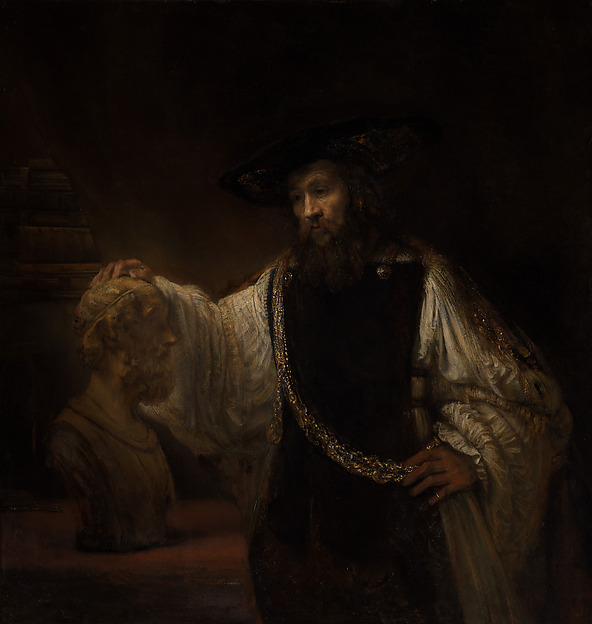
Rembrandt painting Aristotle with a Bust of Homer
Aristotle with a Bust of Homer gives knowledge pages an image of reflection, authority, memory, and judgment.The Metropolitan Museum of Art, Open Access - Public domain
10 minutes

Read ethics, utilitarianism, and deontology.

30 minutes

Add virtue ethics and compare the examples on each page.

90 minutes

Add ren and karma to widen the moral map beyond modern Western theory labels.

Route at a glance

Read the turns, not just the titles.

Topic clusters

Recommended order

  1. Step 1
    01
    Ethics

    Start with the field before choosing a theory.

    What makes a reason moral rather than merely useful?

  2. Step 2
    02
    Utilitarianism

    This theory tests action by consequences and aggregate welfare.

    Which action produces the best overall result?

  3. Step 3
    03
    Deontology

    This theory asks what duty forbids or requires even when outcomes tempt us.

    What must I not do, even for a good result?

  4. Step 4
    04
    Virtue Ethics

    This theory shifts the focus from isolated acts to character and flourishing.

    What kind of person would see and do this well?

  5. Step 5
    05
    Ren

    Confucian ethics foregrounds humane relational cultivation.

    What would care, role, and cultivated humaneness require here?

  6. Step 6
    06
    Karma

    Karma broadens moral consequence beyond immediate visible outcomes.

    How do actions shape the agent and the world over time?

Route completion

What this guide should make easier.

More guides

Core question

What makes a reason moral rather than merely useful?

You should be able to

You will be able to tell whether an argument is focused on outcomes, duties, character, care, harmony, or long-term formation.

Next step

Utilitarianism vs Deontology

Do not stop at the last step; use the next page to test whether the route has become usable.

How to use this guide

01

The useful comparison

Do not ask which ethical theory is nice. Ask what each theory treats as morally basic. Utilitarianism begins with outcomes. Deontology begins with duty. Virtue ethics begins with character. Confucian and Indian traditions often add cultivation, role, consequence, and liberation in ways that do not fit a single modern box.

02

Why hard cases matter

Moral theories become clear under pressure. Truth telling, punishment, privacy, medical triage, addictive design, and political violence reveal what each theory protects and what it risks overlooking.

03

How to use the guide

Pick one real decision and run it through each theory. Notice which details become visible and which disappear. The exercise teaches the grammar of moral argument better than memorizing definitions alone.

Deeper Reading Notes

How To Work Through This Guide

Use this guide actively. Each concept should prepare a question that the next concept can sharpen. Before opening the first entry, write down what you think the guide is promising. After every two steps, return to that promise and ask whether the route is making the original question clearer or more complicated.

The strongest way to use the guide is to alternate between overview and close reading. Read the concise answer first, then the debate map, then the examples. If a term still feels abstract, pause before moving on and state one ordinary case where the concept would help. That habit keeps the guide from becoming a chain of definitions.

A guide page should also protect the reader from false mastery. It is easy to recognize a term after one page and much harder to use it responsibly. The route notes below explain what each step contributes, what it cannot settle by itself, and what kind of question the reader should carry forward.

What Counts As Understanding

Understanding this guide does not mean memorizing every title. It means being able to explain why the order matters. If one concept can be moved anywhere without changing the route, the reader has probably not yet seen its function. The better test is whether each step answers a previous pressure and creates a new one.

Use the pitfalls as diagnostic tools. A pitfall usually marks a place where readers turn a live problem into a slogan. When that happens, return to examples and comparisons. Examples force the idea to do work; comparisons show which nearby idea it should not replace.

By the end of the guide, the reader should be able to move in both directions: from a concrete example back to a concept, and from a concept forward into a question. That bidirectional movement is what makes a guide richer than an index.

How To Annotate The Route

Treat each step as a small argument rather than as a title. In the margin, write what the step claims, what it assumes, and what example would test it. This keeps the route active. The guide is not asking the reader to agree with every page; it is asking the reader to notice how each page changes the available questions.

A strong annotation also records difficulty. If a concept feels clear too quickly, mark the place where the definition might fail. If a concept feels obscure, mark the example that makes it least obscure. Both marks are useful because they turn confusion into a route for rereading.

After three steps, pause and write a bridge sentence between them. A bridge sentence explains why the next page follows from the previous one. If the bridge sentence is weak, the reader has found a gap worth investigating. If it is strong, the route has begun to become usable knowledge.

How To Turn The Guide Into Work

For essay writing, use the guide as a scaffold. The opening becomes the problem statement, each route step becomes a possible paragraph, and the pitfalls become counterarguments. That structure helps prevent a common beginner problem: listing concepts without showing what dispute or question connects them.

For teaching or discussion, assign the route in pairs. One reader explains the concept, the other explains the question it raises. The group then decides whether the next step answers the question or deepens it. This method keeps the guide conversational without losing rigor.

For independent study, return to the guide after reading the linked pages. The best sign of progress is not speed but compression: the reader should be able to summarize the route more clearly after doing the long work. A good guide makes that compression possible without pretending the topic is simple.

Review Cycle For A Second Reading

A second reading should not repeat the first reading. Begin by hiding the route titles and trying to reconstruct the order from memory. Then reopen the guide and look for the first place where your order differs. That difference is not a mistake to erase; it is evidence about how you currently understand the topic.

Next, choose one route step and read its related concept page more slowly than before. Look for the definition, one example, one misconception, and one source. Bring those four pieces back to the guide and ask whether the step now feels more necessary. If it does, the route is gaining depth. If it does not, the step may need a comparison page before it becomes clear.

Finally, write a short map of the guide in your own language. The map should include the opening problem, the turning point in the route, the hardest distinction, and the best next read. This exercise turns the guide from a reading list into a durable structure for memory and later research.

Depth Checkpoints

The first checkpoint is explanation. Can the reader explain each step without copying the page title? If not, return to the concise answer and examples. The second checkpoint is distinction. Can the reader separate this concept from a nearby one? If not, open a comparison page or use the related concepts on the entry page.

The third checkpoint is transfer. Can the reader apply the idea to a fresh example that does not appear on the page? Transfer is where philosophical understanding becomes visible. A reader who can only repeat the provided example has started well, but the idea is not yet flexible.

The fourth checkpoint is criticism. Can the reader say where the concept may fail, be misused, or require another concept? This is not a demand for skepticism for its own sake. It is a way of keeping the guide honest, because philosophy advances by testing the limits of its own vocabulary.

Final Synthesis

The final synthesis should be short but demanding. State the guide's central problem, then name the concept that changed the route most. After that, name one distinction that must not be blurred and one question that remains open. This form gives the reader a compact record of progress without pretending the subject is finished.

A useful synthesis also separates confidence from uncertainty. The reader may now know what a term means while still being unsure how far it applies. That is not failure. It is often the point at which philosophy becomes serious, because the reader can now name the difficulty instead of merely feeling lost.

Return to the guide whenever a linked concept page starts to feel detached. The route is the frame that keeps individual entries connected. With that frame in place, the guide can support a first reading, a review session, a writing plan, or a more advanced research path.

For a final check, choose one concept that seemed secondary and explain why the guide still needs it. If the answer is weak, reread the route notes around it. If the answer is strong, the guide has become a usable structure rather than a list of attractive links.
Step-by-Step Notes

Ethics

01

Ethics appears at step 1 because it sets up a specific task in the route: Start with the field before choosing a theory. Ethics asks what makes actions right, lives good, people admirable, institutions just, and responsibilities binding.

The question to keep beside this step is: What makes a reason moral rather than merely useful? Do not answer it too quickly. First ask what kind of evidence, example, or contrast would make a responsible answer possible. Then use the concept page to test that answer against definitions, misconceptions, and related concepts.

Before moving on, state what this step has changed. It may have introduced a distinction, corrected a false assumption, or made a familiar word harder to use casually. That small summary gives the next step something to build on.

Then ask what would make this step incomplete. Some steps need historical context, some need an example, and some need an opposing view. Naming the missing piece helps the reader decide whether to continue forward or pause for a related page.

The step is ready to carry forward when the reader can connect it to both the previous idea and the next question. That connection is the difference between reading a page and using a page.

Utilitarianism

02

Utilitarianism appears at step 2 because it sets up a specific task in the route: This theory tests action by consequences and aggregate welfare. The right action is often understood as the one that produces the best overall consequences.

The question to keep beside this step is: Which action produces the best overall result? Do not answer it too quickly. First ask what kind of evidence, example, or contrast would make a responsible answer possible. Then use the concept page to test that answer against definitions, misconceptions, and related concepts.

Before moving on, state what this step has changed. It may have introduced a distinction, corrected a false assumption, or made a familiar word harder to use casually. That small summary gives the next step something to build on.

Then ask what would make this step incomplete. Some steps need historical context, some need an example, and some need an opposing view. Naming the missing piece helps the reader decide whether to continue forward or pause for a related page.

The step is ready to carry forward when the reader can connect it to both the previous idea and the next question. That connection is the difference between reading a page and using a page.

Deontology

03

Deontology appears at step 3 because it sets up a specific task in the route: This theory asks what duty forbids or requires even when outcomes tempt us. Moral duties can bind agents regardless of whether violating them would produce better outcomes.

The question to keep beside this step is: What must I not do, even for a good result? Do not answer it too quickly. First ask what kind of evidence, example, or contrast would make a responsible answer possible. Then use the concept page to test that answer against definitions, misconceptions, and related concepts.

Before moving on, state what this step has changed. It may have introduced a distinction, corrected a false assumption, or made a familiar word harder to use casually. That small summary gives the next step something to build on.

Then ask what would make this step incomplete. Some steps need historical context, some need an example, and some need an opposing view. Naming the missing piece helps the reader decide whether to continue forward or pause for a related page.

The step is ready to carry forward when the reader can connect it to both the previous idea and the next question. That connection is the difference between reading a page and using a page.

Virtue Ethics

04

Virtue Ethics appears at step 4 because it sets up a specific task in the route: This theory shifts the focus from isolated acts to character and flourishing. Ethics can begin with the formation of good character rather than with rules or consequences alone.

The question to keep beside this step is: What kind of person would see and do this well? Do not answer it too quickly. First ask what kind of evidence, example, or contrast would make a responsible answer possible. Then use the concept page to test that answer against definitions, misconceptions, and related concepts.

Before moving on, state what this step has changed. It may have introduced a distinction, corrected a false assumption, or made a familiar word harder to use casually. That small summary gives the next step something to build on.

Then ask what would make this step incomplete. Some steps need historical context, some need an example, and some need an opposing view. Naming the missing piece helps the reader decide whether to continue forward or pause for a related page.

The step is ready to carry forward when the reader can connect it to both the previous idea and the next question. That connection is the difference between reading a page and using a page.

Ren

05

Ren appears at step 5 because it sets up a specific task in the route: Confucian ethics foregrounds humane relational cultivation. Ren is often translated as humaneness or authoritative care, a central virtue in Confucian moral life.

The question to keep beside this step is: What would care, role, and cultivated humaneness require here? Do not answer it too quickly. First ask what kind of evidence, example, or contrast would make a responsible answer possible. Then use the concept page to test that answer against definitions, misconceptions, and related concepts.

Before moving on, state what this step has changed. It may have introduced a distinction, corrected a false assumption, or made a familiar word harder to use casually. That small summary gives the next step something to build on.

Then ask what would make this step incomplete. Some steps need historical context, some need an example, and some need an opposing view. Naming the missing piece helps the reader decide whether to continue forward or pause for a related page.

The step is ready to carry forward when the reader can connect it to both the previous idea and the next question. That connection is the difference between reading a page and using a page.

Karma

06

Karma appears at step 6 because it sets up a specific task in the route: Karma broadens moral consequence beyond immediate visible outcomes. Karma concerns action and its consequences within moral, ritual, and metaphysical orders.

The question to keep beside this step is: How do actions shape the agent and the world over time? Do not answer it too quickly. First ask what kind of evidence, example, or contrast would make a responsible answer possible. Then use the concept page to test that answer against definitions, misconceptions, and related concepts.

Before moving on, state what this step has changed. It may have introduced a distinction, corrected a false assumption, or made a familiar word harder to use casually. That small summary gives the next step something to build on.

Then ask what would make this step incomplete. Some steps need historical context, some need an example, and some need an opposing view. Naming the missing piece helps the reader decide whether to continue forward or pause for a related page.

The step is ready to carry forward when the reader can connect it to both the previous idea and the next question. That connection is the difference between reading a page and using a page.

Practice Prompts